

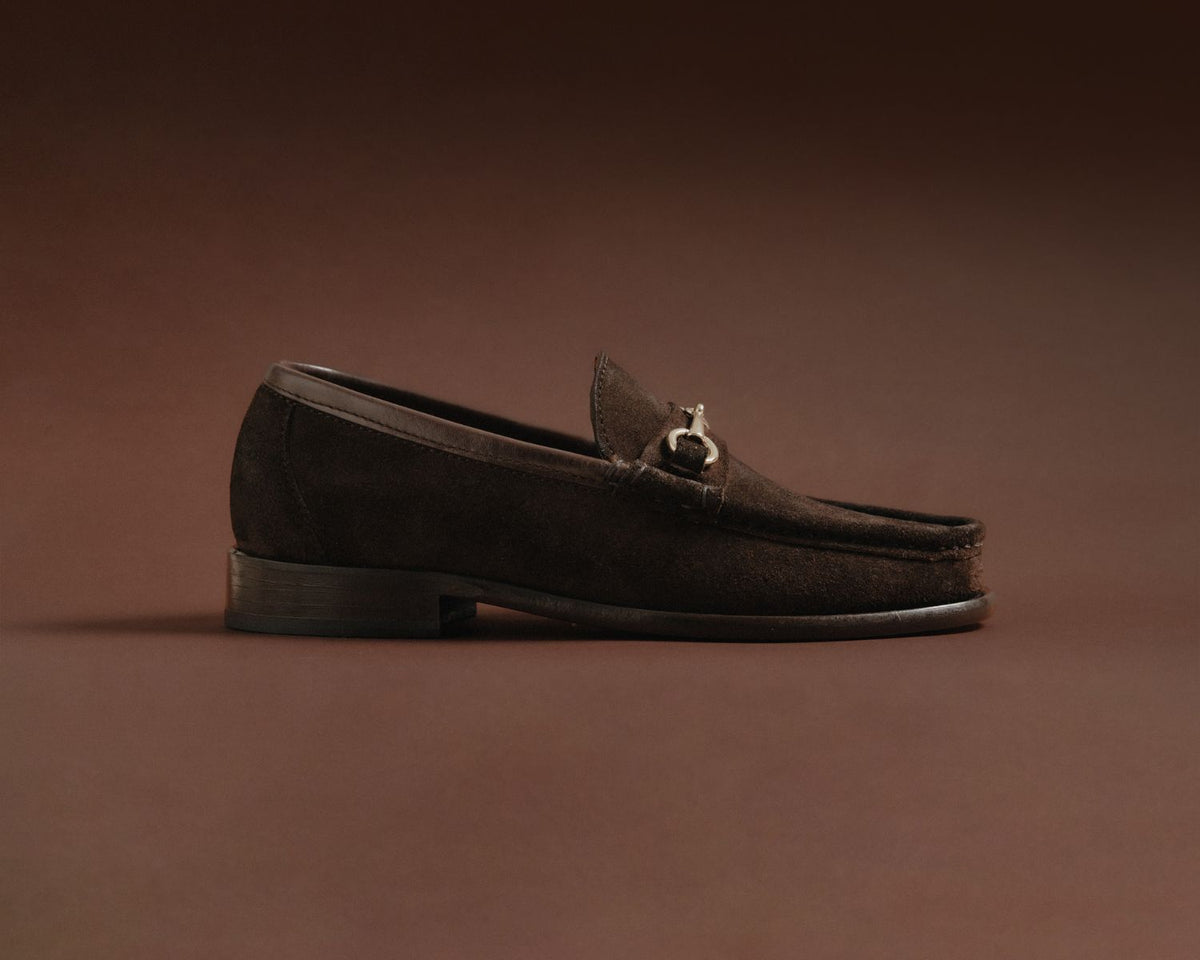

The architecture of footwear
Classic footwear is often analyzed from an aesthetic or comfort perspective, but rarely from a more structural one. However, a well-built shoe shares more with architecture than might appear at first glance. Both are born from the same logic: a balance between form, function, materiality, and human experience.
A shoe, like a space, is not just something to look at. It is something to inhabit.
Architecture organizes emptiness so that the body can move through it naturally. Footwear organizes materials so that the body can stand, move forward, and express itself. In both cases, success lies not in ornamentation, but in the invisible coherence that allows everything to function seamlessly.
When that coherence exists, it is barely perceived. When it fails, it becomes impossible to ignore.
The last, the technical core of the shoe, acts like the architectural blueprint of a building. It defines proportions, volumes, tensions, and main lines. The visual balance and functional stability of the whole depend on it. A well-conceived last allows the leather to drape naturally, the instep to breathe, and the silhouette to be elegant without artifice.
Similarly, in interior design, spatial distribution determines how an environment is experienced. A properly designed space does not require exaggerated gestures; it guides movement, orders perception, and builds atmospheres where everything seems inevitably well-placed.
It is inevitable to draw a parallel with our friends at Estudio DIIR. This comparison is particularly revealing. Their work in Diplomatic stores is not limited to “decorating” commercial spaces. It builds an interior architecture that dialogues with the product’s philosophy: sobriety, proportion, sincere materiality, and silent elegance.
Just as a classic shoe does not seek attention through excesses, a well-resolved interior design avoids unnecessary visual noise. Textures, lighting, spatial rhythms, and material choices obey a common logic: to enhance the experience without imposing on it.
The client does not enter the store as one observes a display window, but as one passes through a space designed to be explored calmly. The perception of the product begins before touching the shoe, just as the experience of a building begins before understanding its structure.
There is also a profound correspondence in the use of materials. In footwear, quality leather ages, develops a patina, and gains character. It does not degrade; it evolves. In architecture and interior design, noble materials—natural woods, stones, honest metals—share this same temporal quality. The passage of time does not ruin them; it enriches them.
Unlike ephemeral or purely cosmetic solutions, both worlds advocate durability as an aesthetic value.
Another meeting point lies in ergonomics. Contemporary architecture has rediscovered the importance of the body: human scale, circulation, light, sensory comfort. Classic footwear, when well-designed, responds to this same discipline. It is not enough for the shoe to be beautiful; it must allow one to walk with stability, distribute loads correctly, and adapt without violating natural biomechanics.
Elegance and comfort are not opposing forces, but variables of the same system.
Finally, in both the shoe and the space, true quality is rarely evident to the untrained eye. It manifests itself in craftsmanship, in correct proportion, in the absence of visual tensions, in the feeling that everything fits effortlessly. It is a discreet form of precision.
A well-built shoe is recognized when walking.
A well-designed space is recognized when inhabiting it.
Diplomatic shares this vision with Estudio DIIR: understanding that the most solid elegance does not rely on flashy gestures, but on structural decisions, honest materials, and a deep attention to invisible detail.
Because, in the end, both footwear and architecture pursue the same goal: to create an experience where the body, movement, and perception coexist in perfect balance.