

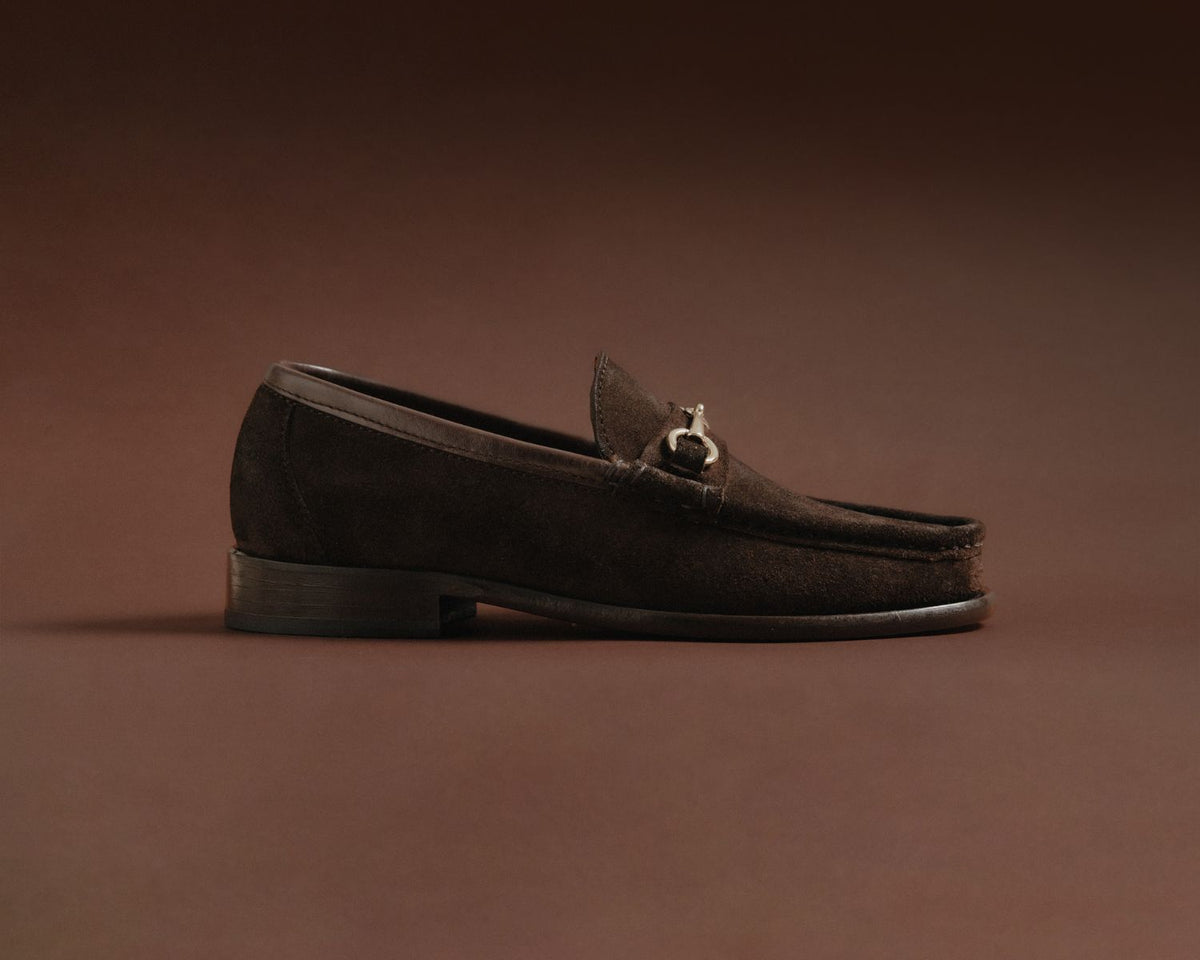

The Oxford shoe: origin, history, and why it is still the king of elegance
Within classic men's footwear, there are many categories, but only one has held the absolute reference for formal elegance for over a century: the Oxford shoe. Its presence is constant at official events, demanding professional environments, and ceremonies where proper dress is not optional, but a form of respect.
But where does the Oxford really come from, and why is it still the most appropriate model when formality is required?
The Origin of the Oxford: English University Sobriety
The Oxford shoe originated in England in the mid-19th century, linked to the academic environment of Oxford University. Until then, formal men's footwear was characterized by high boots and rigid structures, which were impractical for the daily lives of students and professionals.
The Oxford introduced a key innovation: the closed lacing system, which allowed for a cleaner fit and a much more streamlined silhouette. This technical solution was not just functional; it responded to a very British mindset: discretion, order, and rejection of excess.
That DNA remains intact today.
What Truly Defines an Oxford Shoe?
The Oxford is often confused with other similar models, but there is one undeniable defining feature:
the vamp sewn beneath the side pieces, creating a continuous and closed line.
This seemingly minor detail is responsible for its formal character. Compared to more open or flexible models, the Oxford conveys control, neatness, and structure. It doesn't try to draw attention; it commands respect silently.
Oxford and Formality Hierarchy
In classic dress, not all shoes play in the same league. The Oxford occupies the highest rung within lace-up footwear.
It is the correct model for:
-
Formal suits
-
Conservative professional environments
-
Institutional events
-
Weddings and black-tie events
This is not a matter of personal taste, but of social code. Just as you don't wear a sports watch with a tailcoat, you don't substitute an Oxford with a more informal shoe when the occasion demands formality.
Types of Oxford: Not All Are Alike
Within the Oxford itself, there are variations that directly affect its formality:
-
Plain Oxford: with a cap toe divided by a straight line, the most versatile for professional use, like our Doñana Black Calfskin.
-
Perforated Oxford: with decorative perforations, less formal and allows for a wider variety of stylistic combinations, like our Ordesa Truffle Calfskin.
The cleaner the design, the more suitable it is for formal contexts. This rule holds true.
Why Is the Oxford Still Relevant Today?
In an era dominated by informality, the Oxford has not disappeared because it fulfills a clear function: to organize one's personal image.
A good Oxford:
-
Elevates any suit
-
Conveys seriousness without rigidity
-
Ages well, both aesthetically and culturally
It's not a trend. It's a tool.
A well-made Oxford needs no embellishments or exaggerations. Its value lies in proportion, in invisible detail, and in how it complements the outfit without stealing the show.
Choosing an Oxford is Choosing Elegance
The Oxford is not the newest or most striking shoe. It is the most correct. And in classic dress, correctness is a superior form of elegance.
Investing in an Oxford is not an impulsive aesthetic decision, but a conscious choice for tradition, consistency, and the long-term mindset that characterizes the timelessness of classics.
At Diplomatic, we believe that understanding the origin and function of each piece is the first step to dressing well. The Oxford doesn't need to be reinvented, but renewed. It only needs to be understood.