

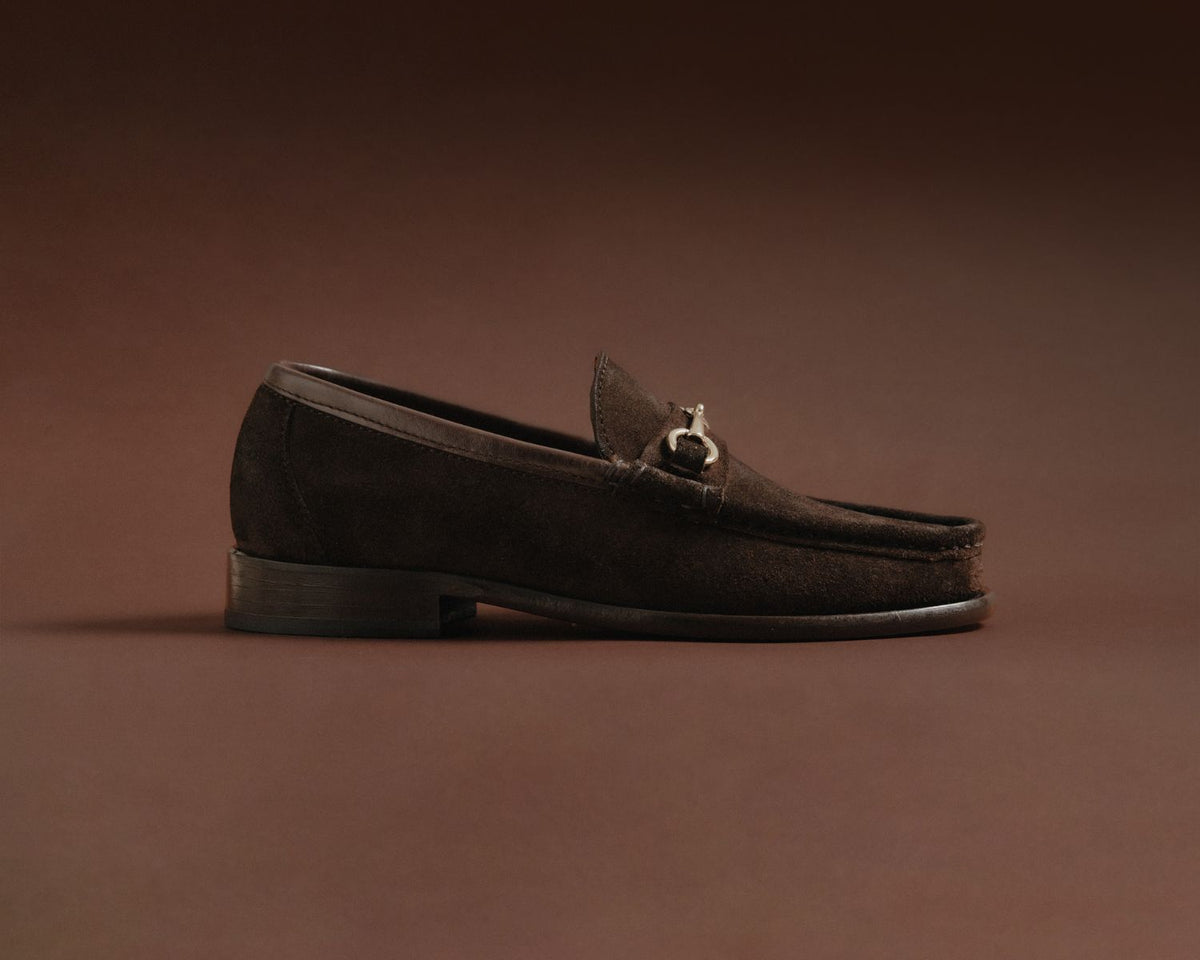

The Psychology of a Good Shoe: First Impression, Presence, and Silent Authority
Before a word is spoken, much has already been communicated. Dressing – and footwear in particular – is part of that pre-verbal, almost instinctive language with which others categorize us, size us up, and interpret us. It is not a matter of vanity, but of basic human perception.
A good shoe doesn't scream; it is elegant and discreet. It organizes the image.
The shoe functions as a visual anchor. In a face-to-face conversation, the gaze rarely stays still. It surveys the whole outfit, goes down, goes up, goes down again. The shoe acts as a closing point: it confirms or disproves everything that came before. A correct suit loses strength if it ends in neglected footwear, while a simple outfit gains authority when supported by well-chosen footwear.
This happens even when one is not aware of it. The brain seeks coherence. When it finds it, it relaxes. When it doesn't, it becomes suspicious.
Aesthetic authority is not about ostentation or imposing oneself, but about not generating visual friction. A well-proportioned, clean shoe, appropriate to the context and the rest of the outfit, conveys control, good judgment, and attention to detail.
Conversely, excess – artificial shine, exaggerated shapes, disproportionate soles – introduces noise. It attracts attention, yes, but not always in the right direction. In classic dressing, authority is not proclaimed: it is suggested.
The message sent by a well-cared-for shoe:
A well-maintained shoe speaks of consistency. Not of fleeting wealth, but of habit. It suggests that the wearer:
- Pays attention to what is not immediate
- Values durability over rapid consumption
- Understands that care is part of use
This message is particularly powerful in professional and social settings where reliability matters more than unrestrained creativity.
Personal security and posture:
There is also an internal effect. Wearing good shoes modifies the way one walks, one's posture, and consequently, one's attitude. A stable, well-fitting, and comfortable shoe allows one to move naturally and confidently.
The modern mistake is to confuse impact with presence. We are surrounded by stimuli designed to grab attention in the short term. In this context, it is easy to confuse impact with presence. But they are different things. Impact is immediate and fleeting. Presence is lasting and calm. The good shoe belongs to this second category. It does not seek to be the protagonist, but to support the overall look and reinforce the general image without apparent effort.
Elegance as a form of respect:
Dressing well – and wearing good shoes – is not an aesthetic obsession, but a form of respect: towards the environment, towards others, and towards oneself. The shoe, being in direct contact with the ground, symbolizes that link between image and reality. An appropriate shoe shows that the outfit has been thought through from beginning to end.
The psychology of footwear does not lie in magic formulas or rigid rules, but in understanding how perception and visual coherence work. A good shoe promises nothing, but delivers. It does not distract, it accompanies. It does not impose, it supports.
At Diplomatic, we believe that the most solid elegance is that which is noticed without needing explanation. And in that silent equation, the shoe carries more weight than many imagine.